Greek vs Roman Stoicism · What’s the Difference and Why It Matters
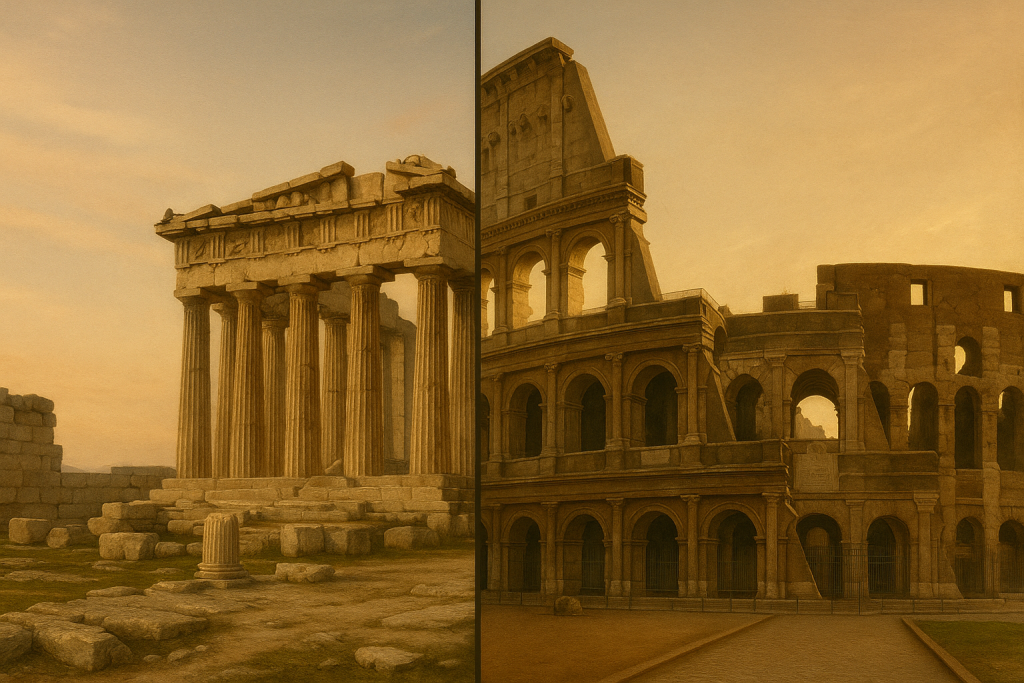
Stoicism was not born in Rome, but it was made practical there.
For all their brilliance, the early Greek Stoics were thinkers more than doers. They wrestled with logic, paradoxes, and cosmology. They designed the architecture of Stoicism, vast and rational, but for the average person it was a building without doors.
Rome changed that. The Romans cared little for abstract puzzles about infinity or the metaphysics of fire and logos. They wanted something they could carry into the Senate, onto the battlefield, or through the trials of ordinary life. In their hands, Stoicism became more than theory. It became a toolkit.
The Greeks built the system. The Romans lived it. That shift is why Stoicism has outlasted empires and still speaks to us today.
The Greek Foundations
To understand why the Romans reshaped Stoicism, we first need to look back at its Greek roots. Around 300 BCE, Zeno of Citium arrived in Athens after surviving a shipwreck that left him nearly penniless. He began teaching in the Stoa Poikile, the painted porch, giving the philosophy its name. His message was simple but demanding. Virtue is the only true good. External things like wealth, status, or even health are ultimately indifferent. To live well is to live in harmony with nature.
His successors deepened the system. Cleanthes carried forward Zeno’s ideas with hymns to reason and cosmic order. Chrysippus, the great systematizer, turned Stoicism into a full intellectual framework. Logic, metaphysics, and natural law were central. He debated paradoxes, wrestled with determinism, and argued that the universe itself was infused with divine reason, the logos.
It was a breathtaking vision. The cosmos was a rational, ordered whole, and human beings were participants in that order. But for most people, this was philosophy at a distance. It was abstract and almost mathematical. The Greeks were the architects, drafting blueprints for a structure too complex to inhabit in daily life.
The Romans would take those blueprints and do what they did best. They built something you could walk into, lean on, and actually live inside.
Why Rome Needed Stoicism
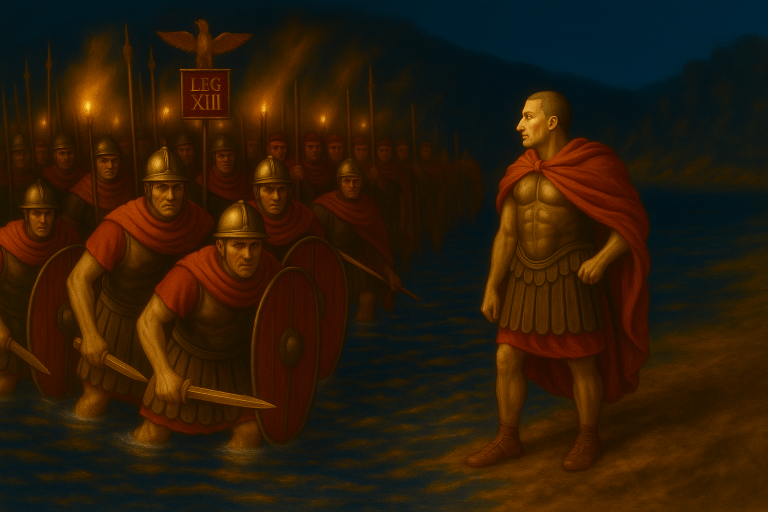
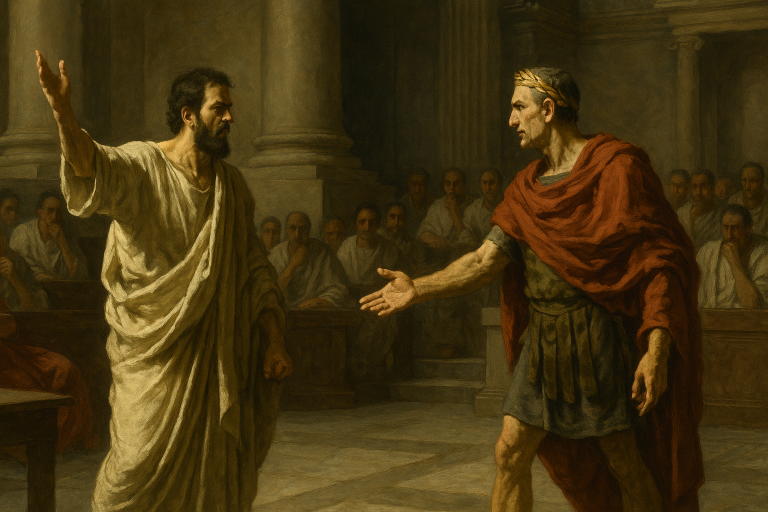
By the time Stoicism reached Rome, the empire was a place of extremes. Expansion brought wealth, power, and glory, but also corruption, political violence, and constant uncertainty. Gladiatorial games spilled blood in the arena while senators schemed in the Forum. Soldiers marched across continents only to return home broken or not at all. Merchants thrived on trade routes that could collapse overnight. Life was brutal, short, and unpredictable.
The Romans prized discipline, resilience, and duty to family and state, what they called mos maiorum, the customs of their ancestors. But ideals alone were not enough to steady a person when fortune turned. They needed a philosophy that could stand in the mud of real life, not just float in the clouds of theory.
Stoicism arrived as a kind of mental armor. It did not promise escape from hardship but offered clarity within it. It taught Romans how to distinguish between what they could control and what they could not, how to remain steady in triumph and in loss, and how to live with dignity no matter their station.
In Rome, Stoicism became not just a philosophy for scholars but a survival guide for citizens, soldiers, and emperors alike.
Applied Philosophy of Roman Stoicism
When Stoicism crossed into Rome, it shed much of its abstraction and took on a practical edge. Roman thinkers were not interested in endless logic puzzles. They wanted a philosophy they could use in the Senate, in the courts, on the battlefield, and in the home.
Seneca, a statesman and tutor to Nero, wrote not in dense treatises but in letters. His Epistulae Morales read like therapy sessions across time, tackling fear, grief, anger, and the shortness of life. He did not lecture about cosmic fire. He told you how to get through tomorrow with composure.
Epictetus, once a slave, sharpened Stoicism into a razor’s edge of practicality. His famous dichotomy taught one rule: control what you can and release what you cannot. For soldiers, merchants, and ordinary citizens, this was philosophy you could memorize, practice, and survive by.
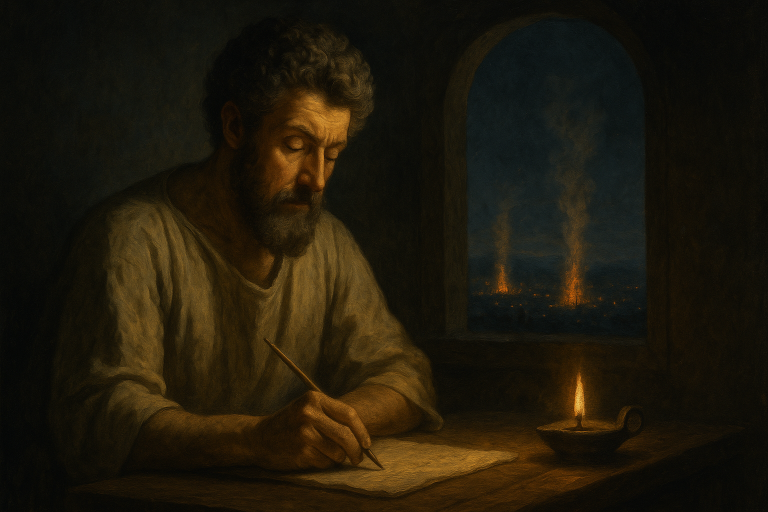
Marcus Aurelius, the philosopher-emperor, wrote during wars and plague. His Meditations were private notes to himself, reminders to stay just, measured, humble, and firm under crushing responsibility. He never intended them for an audience, only as medicine for his own soul.
For the Romans, philosophy was not entertainment or theory. It was a daily discipline like sharpening a sword or training the body. Where the Greeks had given Stoicism structure, the Romans gave it muscle and breath. They turned it into a way of living under pressure, proving that philosophy matters most when life is hardest.
Key Differences Between Greek & Roman Stoicism
The heart of Stoicism remained the same whether in Athens or Rome. Virtue was the only good, externals were indifferent, and to live well was to live in accord with nature. But the way Stoicism was expressed changed once it crossed cultures.
Greek Stoicism leaned heavily on theory. Zeno and Chrysippus built vast frameworks of logic, dissecting paradoxes and debating fate, time, and the order of the cosmos. They treated philosophy like an intricate clock, every cog and gear connected to natural law. It was intellectually rich but often distant from the grit of daily struggles.
Roman Stoicism stripped away the ivory-tower speculation. It kept the ethical core and sharpened it for life in the real world. Instead of cosmic metaphysics, Seneca wrote about how to face the death of a loved one. Instead of paradoxes about infinity, Epictetus urged his students to stop worrying about what they could not control. Instead of hymns to Zeus and the cosmos, Marcus Aurelius reminded himself not to lash out in anger at petty courtiers.
The difference is clear. Chrysippus was the system-builder while Seneca was the counselor. Zeno was the architect of cosmic order while Epictetus was the teacher of personal resilience.
The Romans did not discard Stoicism. They refined it. They cut away what was abstract and left the actionable core, turning it into something a senator, a soldier, or even a slave could live by each day. That practical edge explains why it endured and why it still speaks across centuries.
Why the Romans Made Stoicism Endure
Had Stoicism remained in Greece, it might have survived only as a set of dense philosophical treatises admired by scholars but ignored by ordinary people. The Romans changed that. They did not just study Stoicism, they lived it.
By recasting the philosophy as a daily practice, they ensured its survival. A senator could read Seneca’s letters for guidance on anger. A soldier could carry Epictetus’s words about control into battle. An emperor could steady his soul by journaling in his tent. Philosophy was not reserved for the classroom. It was medicine for anyone facing hardship.
That universality is what carried Stoicism forward. From emperor to slave, the principles were the same. Wisdom, justice, courage, and temperance lived in different circumstances but all pointing toward the same goal: a life of integrity in a chaotic world.
It is no accident that Marcus Aurelius’s Meditations still sell by the millions today while Chrysippus’s logic puzzles gather dust in fragments. The Roman focus on practice is why Stoicism thrives in modern self-help, therapy, and leadership circles. They made philosophy usable, and in doing so, they made it timeless.
Lessons for Modern Life
The Roman Stoics remind us that philosophy is meant to be lived, not just studied. We do not need to memorize abstract doctrines or map out the cosmos. We need tools that keep us steady when life throws its worst at us.
Take Marcus Aurelius and his habit of journaling. His Meditations were never written for publication. They were private reminders to himself. The same practice works today. A few lines each morning or evening asking where you acted justly, where you lost your temper, and what you will do better tomorrow. Journaling becomes a mirror that keeps you accountable to your own standards.
Epictetus taught the dichotomy of control. In an age of constant noise from headlines, social media, and crises beyond our reach, his advice is sharper than ever. Focus on what you can influence and stop bleeding energy on what you cannot.
Seneca’s counsel on fear and loss is just as modern. He urged his readers to rehearse adversity, not in a grim way but to strip fear of its sting. Think of it as stress inoculation, a way of picturing setbacks in advance so they do not overwhelm you when they come.
The point is simple. Stoicism is not a bookshelf decoration. It is a daily habit. The Romans proved that philosophy becomes powerful only when it moves off the page and into life.
Why Rome Still Matters
The Greeks built the framework of Stoicism, but the Romans brought it down to earth. They transformed it from abstract theory into a lived philosophy that could guide an emperor on campaign, a senator in the Forum, or a slave in chains. That shift from thinking to doing is what gave Stoicism its lasting power.
Today we face our own chaos in political division, economic uncertainty, and personal struggle. The Romans show us that philosophy is not about retreating into theory but about stepping into life with clarity and resilience.
Stoicism survived because the Romans made it practical. The question now is simple. Will you?