How to Live Well Amid Political Upheaval · A Roman Stoic Approach
We live in a time of sharp division, where anger spills easily into violence. The recent assassination of Charlie Kirk is only the latest reminder that political hatred is not just words online or heated debates in the public square. It can harden into blood on the ground. In the aftermath, the nation has watched with a mix of shock, rage, grief, and even forgiveness. Some call for justice, others for mercy, and many of us wrestle with how to make sense of it all.
But upheaval is not new. The Romans lived through assassinations of their leaders, endless civil wars, and the corruption of power at every level. For them, turmoil was not an exception but the backdrop of life itself. And yet, Stoicism thrived in that environment, not because it offered escape, but because it taught how to live well amid chaos.
The question is not whether upheaval will happen. It always has and always will. The real question is how we respond. The Romans turned Stoicism into a philosophy of survival, discipline, and virtue when the world seemed broken. And that same approach is still within our reach.
Politics Has Always Been Bloody
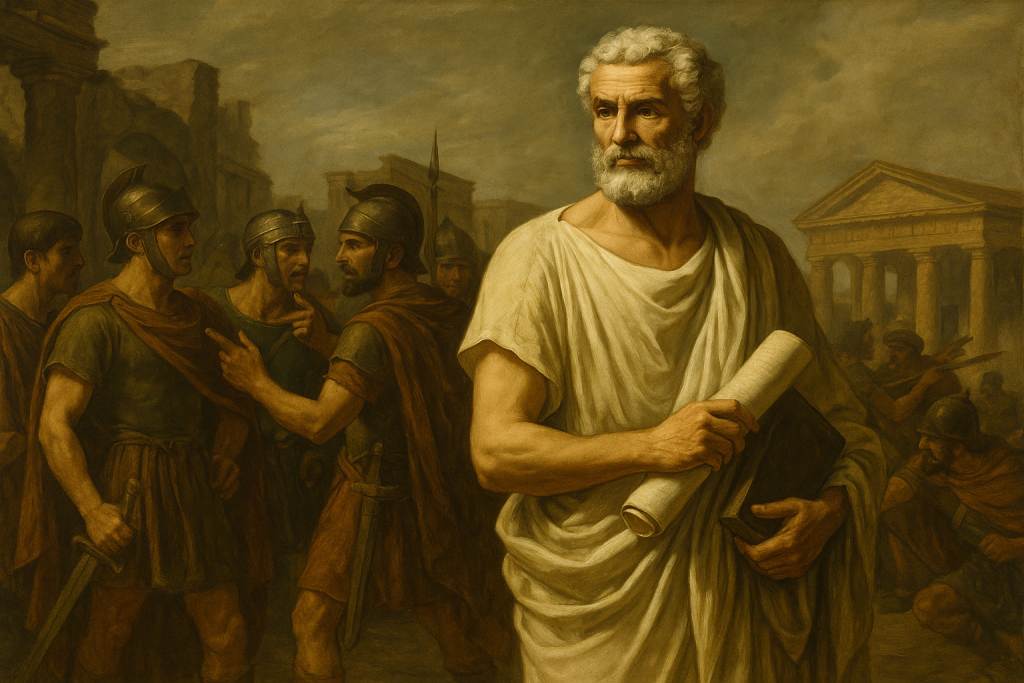
When we think about political division today, it’s tempting to imagine that we are living through some uniquely chaotic era. But history humbles us. Rome was built on upheaval. Julius Caesar was cut down by his own senators. Cicero’s hands and tongue were nailed to the rostra after his murder. Emperors were poisoned, strangled, or stabbed in their sleep. Political purges, betrayals, and sudden reversals of fortune were the rhythm of Roman public life.
To live in Rome was to live with constant instability. A friend today could be an enemy tomorrow. A law passed in one season might be overturned the next. The average citizen could never be sure which ruler would hold power by year’s end. Against this backdrop, philosophies that promised only abstract answers would not suffice. What Romans needed was a framework to stay upright when the ground shifted under their feet.
That is why Stoicism caught fire in Rome. It gave men and women tools for endurance, for clarity, and for moral steadiness when everything around them was uncertain. It taught that even in the face of corruption and violence, one could remain unshaken.
Our time is no less turbulent. And as the Romans discovered, the only way to live well amid political bloodshed is to root ourselves in a philosophy that outlasts it.
What Stoicism Teaches About Control
The heart of Stoicism is a simple but demanding idea. Some things are within our control, and some things are not. Epictetus, once a slave, built his entire philosophy on this distinction. We cannot control assassins, mobs, or the decisions of politicians. We cannot stop every injustice or shield ourselves from every tragedy. But we can control how we respond.
This principle is easy to repeat and hard to live. Rage feels natural when political violence erupts. Grief and despair are heavy when a life is taken unjustly. Yet to surrender to rage is to give the killer power over more lives than the one he struck down. To wallow in despair is to lose twice. First the victim, then the strength to carry on.
Marcus Aurelius, writing in the middle of wars and plagues, reminded himself daily that even an emperor cannot command the world. He could only command himself. His counsel is clear. Focus where your action matters and let go of the rest.
Erika Kirk’s choice to forgive her husband’s assassin is not one everyone will agree with, but it shows a Stoic truth in action. She cannot undo the crime, but she can control the state of her own heart. In that, she preserved her power.
Justice and Consequences
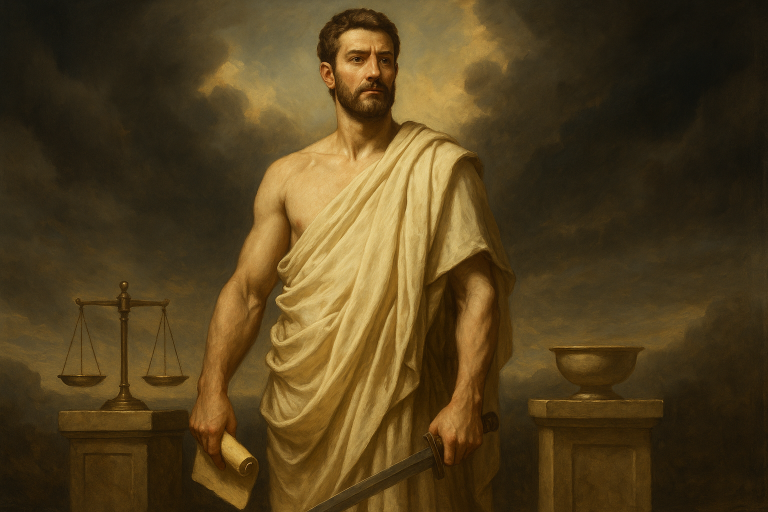
Among the four Stoic virtues of wisdom, justice, courage, and temperance, justice is the one most directly tied to our life with others. To the Stoic, justice means giving each person their due, honoring truth, acting fairly, and holding wrongdoers accountable. Without justice, the other virtues collapse into self-indulgence.
The murder of Charlie Kirk raises difficult questions of justice. His widow’s public forgiveness stunned many, especially so soon after the crime. Was this Stoic? Was it Christian? Was it weakness? A Stoic would say that forgiveness does not erase consequences. Erika Kirk can choose not to carry hatred in her heart. That is her right, and perhaps her strength. But justice still demands that the assassin face the law, and that society protect itself from further harm.
Seneca warned against confusing mercy with indulgence. A ruler who pardons every crime is not merciful but careless with justice. Mercy is only true when it coexists with fairness, when compassion tempers punishment without undermining it.
In Stoic terms, forgiveness may cleanse the soul of bitterness, but it does not dissolve responsibility. Justice is not vengeance, but neither is it blind charity. It is the virtue that steadies the scales even when emotions urge us to tip them wildly in one direction or another.
Living with Courage Amid Division
Political upheaval breeds fear as much as anger. Fear of speaking your mind. Fear of being attacked for your beliefs. Fear that your country is slipping beyond repair. In such times, courage is not just a virtue for soldiers. It becomes a daily necessity for anyone who refuses to let fear dictate their choices.
For the Stoics, courage was not reckless boldness. It was steady firmness in the face of danger. Marcus Aurelius wrote, “If it is not right, do not do it. If it is not true, do not say it.” That is the essence of Stoic courage. The strength to stand by what is right without bending to threats, intimidation, or mob opinion.
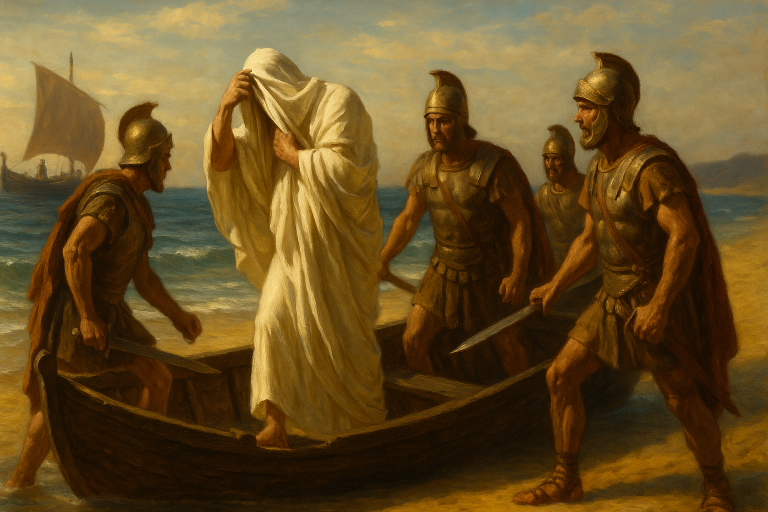
In Rome, speaking the truth often meant risking exile, loss of property, or even death. Seneca’s calm acceptance of his forced suicide under Nero remains one of history’s starkest examples of philosophical courage. He did not cling to life at any cost. He chose to meet his end with composure, affirming by action what he had taught in words.
Today, courage may mean voicing conviction when it is unpopular. It may mean staying calm when panic spreads. It may mean refusing to let political violence silence you. It is the virtue that keeps us from collapsing into either cowardice or rage.
Why Temperance Matters in Chaos
Of all the Stoic virtues, temperance is often the most underestimated and the most difficult. It is easy to picture courage in moments of crisis or justice in courtrooms and politics. But temperance is tested in the ordinary temptations that pile up when life feels chaotic.
Think about alcohol. One drink can take the edge off. A second can loosen you up. By the third or fourth you are no longer choosing, you are being carried along. What should have been a moment of ease becomes a loss of control. The same failure of temperance plays out in public life. Not in bars, but in how we consume the news, argue online, or let emotions dictate our choices.
When desire rules every decision, we hand over our freedom. When indulgence dominates our reactions, we become slaves to circumstance. The Stoics taught that temperance is not just moderation in food or drink. It is mastery of the self. The ability to hold back when giving in feels easier, to step away before impulse turns to habit, to govern your moods before they govern you.
In a divided world, temperance is what keeps us from being swept away. It creates the space where wisdom and justice can operate. Without it, courage becomes recklessness. Justice becomes vengeance. Wisdom becomes arrogance. With it, we gain clarity, even when the world around us is lost in excess.
How to Practice Stoicism in a Turbulent Age
The Romans never treated Stoicism as theory alone. It was something to practice daily, like sharpening a blade or exercising the body. In times of turmoil, this discipline mattered more than ever.
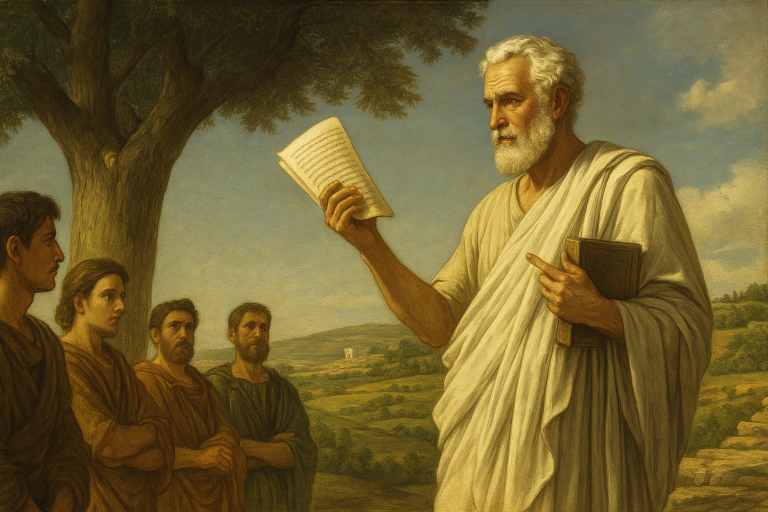
Marcus Aurelius kept a journal not to impress others but to hold himself accountable. We can do the same. Each day, write a few lines about where you lived up to the virtues and where you failed. Temperance, justice, courage, and wisdom grow stronger when you track them with honesty.
Epictetus taught the dichotomy of control. Apply it to politics by focusing on the votes you cast, the conversations you hold, and the character you embody. Release the rage at headlines, conspiracies, or forces beyond your reach. That distinction frees your mind from endless exhaustion.
Seneca urged the rehearsal of adversity. Imagine losses before they arrive, not to brood but to prepare the soul. In practice, this means bracing for disappointments, betrayals, or sudden shocks so that when they come, they do not shatter you.
Finally, cultivate community. The Stoics gathered, wrote letters, and taught disciples. Seek out others who aim not only to share your views but to live with virtue. In the end, Stoicism does not thrive in isolation but in the steady support of people striving toward the same good.
Living Well in a Broken World
Political violence is not new. Rome lived through assassinations, purges, and civil wars, just as we face upheaval and division in our own age. What Stoicism offered then and still offers now is not an escape from turmoil but a path to live well within it.
The four virtues remain the compass. Wisdom helps us see clearly. Justice teaches us to act fairly. Courage gives us strength to face fear. Temperance trains us to master ourselves. These virtues do not erase tragedy or injustice, but they give us a way to meet them without collapsing into bitterness or despair.
Charlie Kirk’s assassination reminds us how fragile life and politics can be. Yet Stoicism teaches that our measure is not in what happens to us but in how we respond. Will we rage, complain, and fracture further? Or will we practice restraint, courage, and justice even when it hurts?
The Romans showed that philosophy can be lived in the midst of blood and chaos. The same choice remains open to us. We cannot stop the upheaval, but we can decide how to live through it. That choice is the mark of a Stoic.